Primary sources cited
This article links directly to the primary documentation, paper, filing or original reporting used for its material claims.
AI assistants could review bills, compare providers and help customers negotiate a better deal, even when they weren’t thinking of leaving.
The customer does not need to invent the question every time. With consent, the assistant can propose the review.
Author: Ian Ash
Published: October 14, 2026
Category: Analysis
Your next retention problem may begin with a customer who was not even thinking of leaving. Imagine their bill-management app notices a price rise and asks: “Would you like me to check whether you can do better?” No carefully crafted chatbot prompt is required. A familiar service has simply reopened a relationship that might otherwise have renewed without a second look. For companies whose economics benefit when customers rarely question their terms, that is a much more immediate possibility than an autonomous agent moving every bank account.
That is why the next move in consumer-facing AI may matter before autonomous switching does. Once a customer has opted in, connected relevant data and set clear permissions, an assistant can watch for the moments when a relationship becomes worth reopening: a renewal date, an out-of-contract tariff, a new recurring charge, a service failure, a price rise or an unexplained bill. It can then propose a review. The customer still decides whether to look, whether to contact the provider and whether to accept a result. But the customer no longer has to recognise every opportunity and formulate every question unaided.
This article’s editorial thesis is deliberately strong: opt-in, proactive review will make AI-assisted customer advocacy commercially important sooner than unrestricted autonomy will. That is not a forecast that most people will hand over their finances, switch banks en masse or let an agent make purchases without oversight. It is a reasoned judgement about where the first material effects may appear. They are more likely to be renewal-price conversations, refunds, downgrades, cancellation enquiries and better retention offers than dramatic churn figures. A company waiting for a visible wave of account closures may be measuring the last stage of the change, not the first.
AI-assisted customer advocacy is used here as a descriptive working term, not as a settled category or a claim that the software is a fiduciary. It means a customer-side service that can inspect an existing relationship, identify a possible problem or alternative, prepare or undertake a narrowly authorised task and preserve the customer’s final say. Its value is not that it always makes a customer leave. Sometimes the fair answer is to stay. The point is that staying becomes an informed decision rather than the default produced by friction.
A fair objection has been raised to this thesis: most people will not ask an AI whether they should switch banks. That is probably right. No survey in this evidence base follows people from asking that precise question to actually changing banks. It would be careless to manufacture the behaviour from generic AI use, product research or enthusiasm for a chatbot.
But that objection assumes that the consumer must always initiate the review. The more interesting product design changes the sequence. The customer gives bounded, revocable permission to inspect specified information. The service notices a potential trigger. It explains why a review may be worthwhile, shows the evidence and asks for the next permission. A renewed contract is not evidence of satisfaction. It may simply be evidence that no one reopened the file.
Rocket Money’s announced Rowan design is the clearest current example of this proposition. Rocket Money said on 25 August that Rowan was launching to select Premium Plus subscribers, and presented it as a personal-finance assistant that could identify savings opportunities, work on recurring bills and help with cancellations. The company’s own descriptions also say that human verification remains part of the service. 1 2 That is important precisely because it limits the claim. Rowan is announced and limited in rollout, not independently observed evidence that proactive prompts have been activated, acted upon or delivered a measured outcome. The design is the signal: monitoring can propose the question before a customer thinks to ask it. The outcome remains unproven.
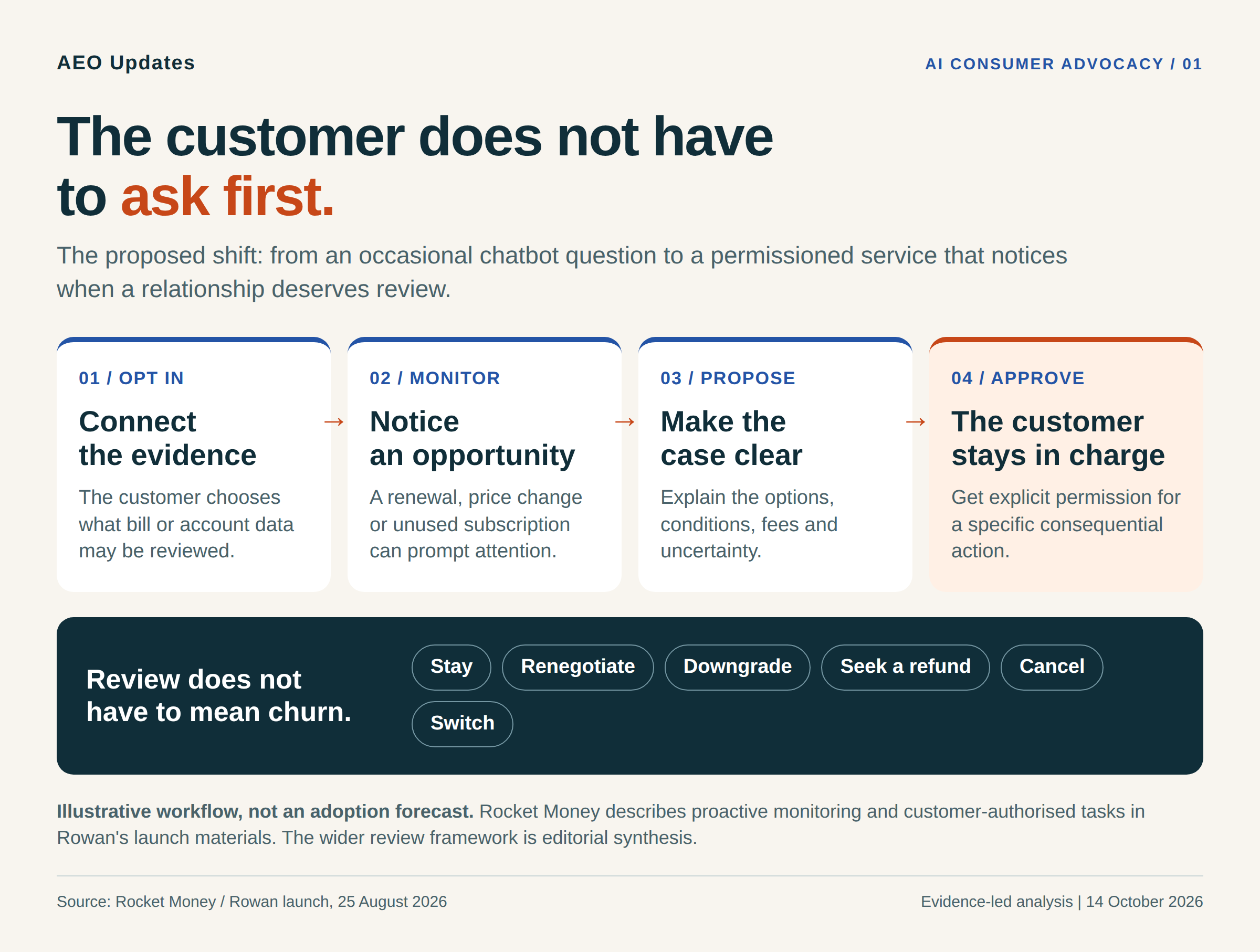
Figure 1. The proposed proactive-review model. Rowan is an announced, limited-rollout example; the wider sequence is editorial synthesis, not an observed adoption funnel. 1 2
This is a behavioural and operational hypothesis, not a population forecast. Existing permissions, account data and recurring transactions could lower the burden of initiation after consent. They do not prove that customers will welcome the alerts, that the signals will be accurate or that providers will honour an agent-mediated request. They make the hypothesis testable. The right measures are not launch headlines. They are opt-in rates, alert relevance, review acceptance, customer effort, fee-adjusted value, approval rates, reversals and whether the customer would use the service again.
The early market is not one thing. It includes purpose-built consumer services, familiar financial tools with adjacent capabilities and general tools used by people to do the work themselves. Treating those routes as equivalent creates false confidence.
Purpose-built advocates make the customer’s recurring administrative work their explicit proposition. Pine’s original materials say it raised a $25 million Series A and that it has “already saved consumers over $3 million”. 3 Those are Pine’s own aggregate claims, without a disclosed cohort, task count, geography, period, numerator, denominator or independent audit. They should not be used as proof of demand, typical savings or effectiveness. They do, however, show a vendor making consumer bill work commercially central to its offer.
Pine’s product documentation is more useful than the headline because it reveals the real workflow. It says a user supplies bill details, Pine may contact a provider to seek lower rates, promotions or removal of fees and add-ons, and some cases require a three-way call so the user can verify identity or authorise a change. On Free and Pro Monthly plans, the documentation says Pine places a temporary hold based on estimated savings times 25% and charges a 25% success fee only after savings are confirmed; other listed plans use credits instead. The page does not disclose a separate human operator or reviewer, so none should be inferred. 4 The lesson is not that the system is autonomous. It is that useful advocacy can combine automated preparation and provider contact with customer participation at the point the provider requires it.
Gravy is another purpose-built route, positioned through Y Combinator as a Spring 2026 consumer-finance company. Its launch page says users can connect banks, investments and email, and that Gravy works in the background as finances update. It gives examples of identifying subscriptions, cancelling a named service, tracking rent and bills, moving money and negotiating utility deals. 5 These are advertised capabilities and prompts, not logged completion, a user study or evidence that transfers or negotiations occurred under a known approval process. Their significance is strategic rather than evidential: several companies are trying to make ongoing personal-finance work the object of the product, rather than a one-off question in a chat window.
Kudos and Rocket Money fit the same broad route, although their evidence should be differentiated. A CNET reporter’s hands-on test found that Kudos surfaced potentially useful telecom retention information but ran into permission, verification and offer-condition barriers; the reporter concluded it was not faster or easier than calling. 6 Kudos’s own product pages establish a deployed bill-negotiation and subscription-cancellation proposition, not a validated result. 7 This is what an early market looks like: promise, partial capability, inconvenient edge cases and evidence that the hard work is often not finding an offer but establishing identity, authority and acceptable terms.
Familiar tools are a separate route. They may have existing permissions, transaction data, recurring patterns and customer trust that reduce the initiation burden. That makes them strategically important even if their current use case is not consumer advocacy. But it is essential not to turn an adjacent feature into an invented product category.
QuickBooks makes the boundary visible. Intuit’s AI materials describe business accounting, accounts payable, vendor bills, invoicing, payroll, cash flow and related workflows. Its bill functionality is business “money out”, not a household bill manager. 18 19 Intuit has announced AI agents for businesses, and its Investor Day presentation describes Bill Pay embedded in its mid-market products. 27 These are not evidence of a consumer tool that negotiates household bills, cancels services or changes providers. QuickBooks is mainly an SMB and mid-market financial platform, not the household relationship hub imagined here. The proper conclusion is an embedded-tool hypothesis: a familiar household bill manager could make a consumer review easier to start, while a business platform could supply an analogous service for company expenses, if it has the relevant permissions and data. It is not a claim that QuickBooks already offers consumer advocacy.
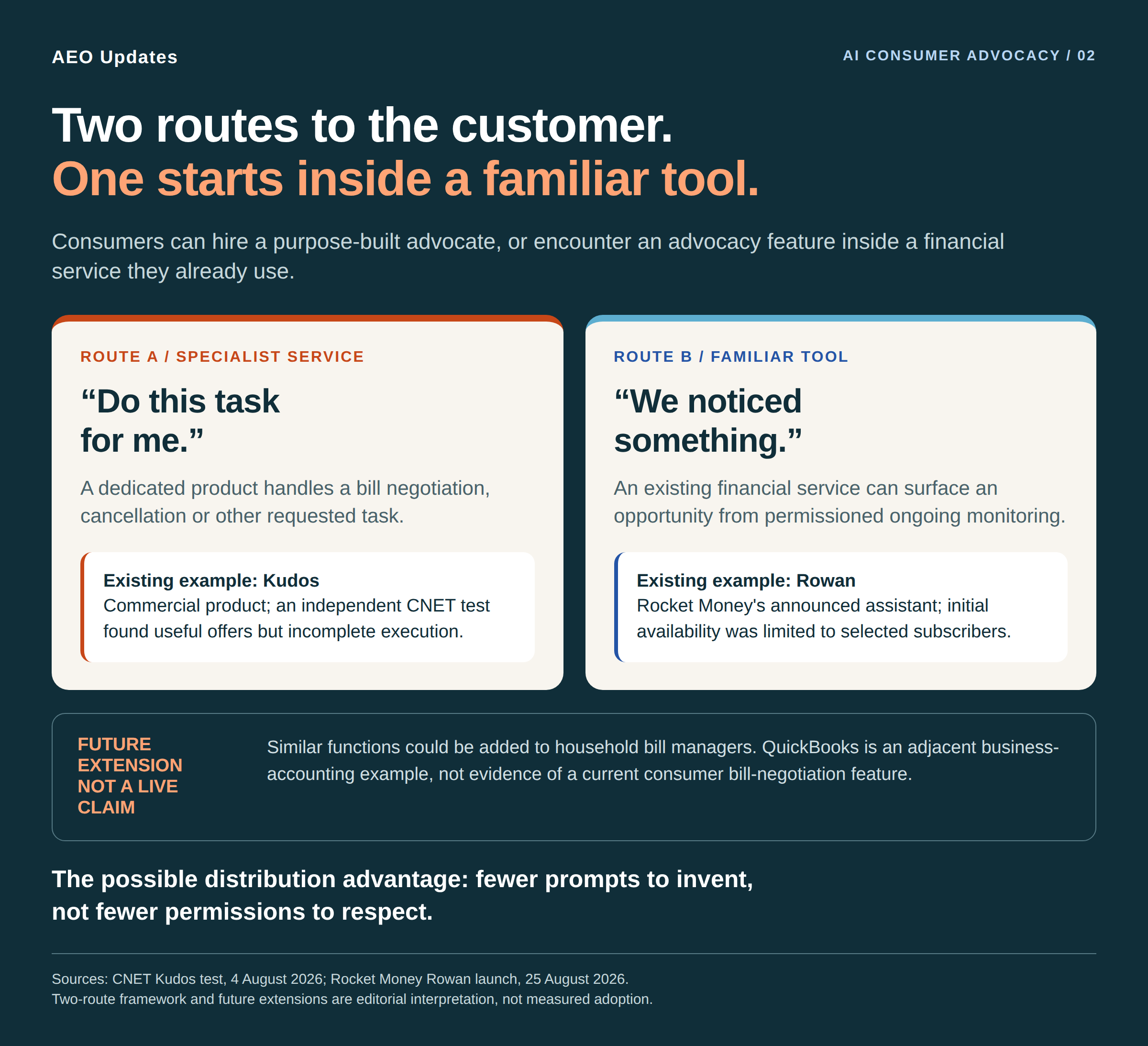
Figure 2. Different distribution routes can lead to a customer-authorised review. Real product evidence and possible future extensions are labelled separately; QuickBooks remains a business-focused comparison. 1 6 18 19 27
A third route is even more immediate: a person uses a general tool as an assistant, then performs the consequential action themselves. That is less glamorous than an agent acting in the background, but it may be where learning and trust accumulate first.
A first-person Business Insider account by Jamie Phillis is instructive because it is neither a product demo nor a population study. Phillis described using Otter.ai to transcribe calls and ChatGPT to review materials, perform insurance-related calculations, draft appeal letters, follow formatting instructions and give mailing instructions after a dental-insurance dispute. She revised the first draft five times, made the calls and personally filed the appeals and an Arizona Department of Insurance complaint. 8
The outcome needs careful wording. Phillis wrote that an initial appeal was denied and that, after a second-level appeal, the case was never formally resolved. The dental office nevertheless did not bill the uncovered amount, and she said she ultimately never paid the roughly $1,200 responsibility. 8 That is not a confirmed insurer reduction, settlement or causal demonstration of AI efficacy. It is one self-reported dental-bill case, n=1, with human review and filing throughout. Yet it makes the central point unusually well: AI can lower the cost of understanding a document, assembling a case and producing an administratively acceptable response before it is trusted to make an irreversible decision.
David Pullara’s account of a Rogers internet renewal is similarly revealing. He says he used ChatGPT to rapidly research comparable internet offers, then personally called Rogers, authenticated himself and negotiated with a human representative. He reports accepting an upgraded plan for $60 a month with no installation charge after a planned increase from $69.99 to $140. 9 The source provides no bill, call recording, independent provider confirmation or denominator. It also does not show that Rogers adopted an AI negotiating system. Pullara’s speculation that a future agent might “just... make it happen” is a proposal, not what happened. The reported workflow was human-to-human negotiation equipped with faster research.
These cases are not evidence that a market has already crossed into dependable autonomy. They show a more practical sequence: assistance with reading, comparing, calculating, drafting and preparing can produce enough value to earn a second use. That is a much lower bar than asking someone to let software move money or cancel a core service without review.
The trend is not visible only in product announcements. In September reporting, Business Insider’s Emily Stewart described TTEC’s quality-assurance team detecting unusual callers and identifying AI voices. James Bednar, TTEC’s vice president of product and innovation, described discussions with clients about how to handle them. The report said third-party bill-reduction and subscription-cancellation services had begun using AI instead of human negotiators, while agents deployed directly by customers were less common but growing. 35
That is qualitative operational reporting, not a call-volume dataset or measured adoption rate. It nevertheless supplies a different answer to the initiation objection. Consumers may delegate to a service without choosing a model or constructing a prompt; the service can introduce AI behind an interface they already understand. TTEC Digital had also publicly discussed AI customers and human-oriented authentication barriers in January. 36 Account verification, missing information and legitimate fraud controls remain practical limits, not incidental obstacles to be bypassed.
There are reasons for expecting commercial relevance before mass autonomy. The benefit can be tangible: a corrected charge, an unnecessary subscription removed or a better renewal, provided it still represents value after fees and time spent. The first commitment can be small, such as explaining one bill or preparing one negotiation. A useful result may encourage another bounded use, without requiring the person to delegate all financial decisions.
The work also recurs. Bills arrive, promotions expire and circumstances change. A permissioned service can return to the problem at the next trigger rather than depend on the customer remembering to open a chatbot. Dedicated subscriptions and success-fee models give vendors a commercial reason to make that workflow easier. Familiar financial tools may offer distribution and context. These incentives make faster growth in relevance plausible; they do not prove retention, net savings, market size or the speed of adoption.
The evidence is consistent on a broad point, even though the surveys cannot be pooled. People are more open to a defined task with oversight than to an agent initiating and completing a consequential purchase on its own.
Accenture’s Consumer Pulse Research 2026 supplies the cleanest visual contrast for recurring services. In its main representative survey of 25,590 consumers across 16 countries, fielded 7–22 January 2026, recurring services, defined in the chart as insurance, telecommunications and utilities, ranked first across the study’s purchase types. The figure reports 78.9% openness to task execution and 12.5% openness to autonomous purchasing for that grouping. 10 The values are all-consumer survey percentages across 15 categories grouped into five purchase types. They are not findings from the report’s separate 50 AI-moderated qualitative interviews, and the report does not disclose a standalone recurring-services subgroup count.
The gap has a human explanation. A US Gen X participant in the separate qualitative component said: “I like the idea of it all being done by an AI agent, but I want to approve it before it’s officially purchased. I want to review the choices that were made on my behalf to make sure that they’re accurate and that they’re what I really want.” 10 That sentence is not a market measurement. It is, however, a precise design brief: do the labour-intensive work, reveal the choice and leave the commitment to the person.
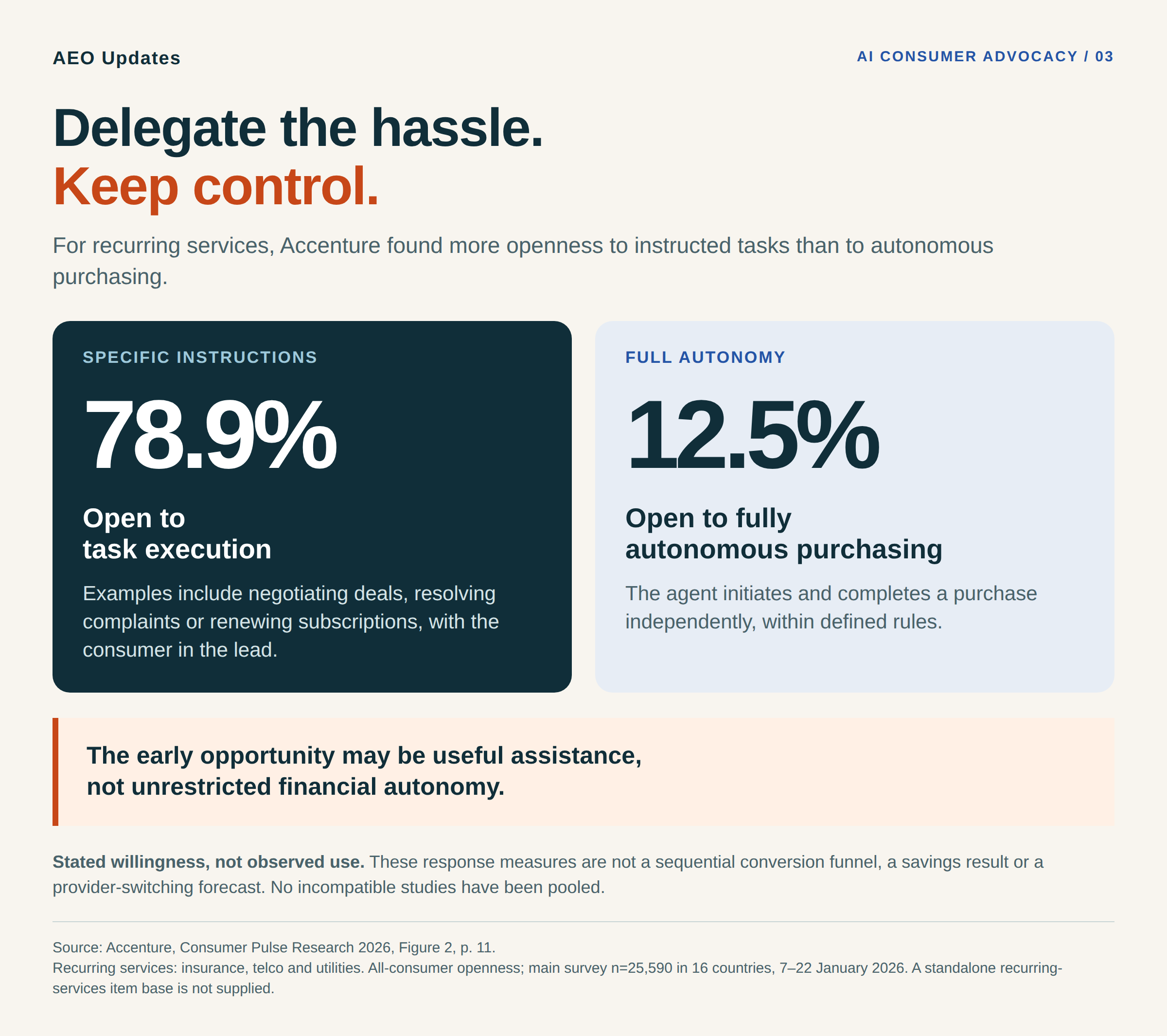
Figure 3. A single-study comparison, not pooled evidence. Accenture’s recurring-services Figure 2 reports stated openness, not actual transactions or provider switching. 10
Deloitte Digital Australia provides a related, but separate, signal. Its April 2026 study says 79% of 3,000 surveyed Australian consumers who had used AI in the past year would use an AI agent in order to save money. 11 The public materials do not publish the item’s exact denominator, fieldwork dates, recruitment, weighting or fuller question wording. This is hypothetical willingness, not actual delegation. It should not be merged with Accenture into an adoption statistic. Still, it supports the editorial proposition that a specific benefit, saving money, may be more compelling than an abstract invitation to “use an agent”.
The counterevidence is as important. Gartner reported two separate US waves: a January 2026 survey of 322 consumers found 31% willing to allow AI to narrow household-supplies choices, while willingness to let AI make purchase decisions topped out at 11% in lower-stakes categories. In a distinct November–December 2025 wave of 846 consumers, among people who had used AI while shopping for a recent purchase, 54% said they had to double-check all information provided and 62% said it had ended up wasting their time. 12 The latter percentages have undisclosed subgroup denominators. They are retrospective perceptions, not transaction logs, but they warn that a proactive assistant which creates false alarms or extra checking will not earn the right to become habitual.
Nor is there a reason to assume that people will demand a bank switch. The Financial Health Network’s probability-based 2024 US research found only 3% of households had used general chatbots for personal-finance information in the prior year, compared with 42% using banks or financial institutions as an information source. 13 Deloitte’s 2026 US banking work finds the tension persists: research use of generative AI can coexist with concern about sharing financial information and anxiety over action without approval. 14 The editorial case does not depend on overcoming all of that. It depends on a smaller proposition: an assistant that notices a discrete issue and can prove its case may make an occasional review feel worthwhile.
This argument should not be read as a celebration of churn. Most consumers do not want to switch banks or service providers for its own sake. Ofgem’s British energy research found that comparison exceeded active supplier switching, while Ofcom found both out-of-contract exposure and a substantial share of households content to remain despite possible savings. 15 16 That is not merely inertia. Service quality, bundles, exit fees, eligibility, confidence and time all matter. A responsible assistant should be able to say, with evidence, that the incumbent remains the best option.
But the existence of a fair stay option changes the commercial interpretation. The first effects of better consumer-side review could be more renewal queries before a price increase takes effect; more requests for a retention rate, refund, correction or bill explanation; more plan downgrades when the customer has excess capacity; more cancellation inquiries that create a chance to remedy a failure; and fewer cases in which a customer discovers, too late, that their terms are uncompetitive.
These are not observed population outcomes. They are the more plausible commercial mechanisms by which proactive review could show up first. A company that treats every query as a threat misses the possibility of a more defensible relationship: the customer sees the terms, challenges them and accepts a fair answer. The alternative is not necessarily loyalty. It may be the eventual discovery that the relationship was only being retained because comparison took too much effort.
The regulatory background explains why cancellation and recurring-bill help can be a useful wedge. The FTC said it received nearly 70 complaints a day on average in 2024 about negative-option and recurring-subscription practices. 17 That evidence demonstrates consumer-reported friction, not AI effectiveness. It nevertheless makes a narrow workflow credible: find the terms, identify the route, assemble the evidence and help the customer request the outcome. It should not be turned into a blanket claim that a bot can, or should, cancel everything by itself.
The same caution applies to funding and vendor savings claims. A funding round can show that investors see a commercial possibility. A vendor’s asserted aggregate savings can show the kind of result it wants to advertise. Neither is audited demand, independently verified benefit or proof that the economics work after fees, mistakes and human time. The critical metric is net customer value, not a gross saving headline.
Permission cannot be bolted onto an advocacy product after the sales story. The assistant may need a bill, a renewal notice, a service record, an account connection or access to a provider channel. Each should have a specified purpose, duration, revocation route and action boundary. “Find something worth reviewing” is not the same authority as “accept a new plan”, “cancel this service” or “move money”.
JPMorgan’s recent public position makes the distinction tangible. CNBC reported that the bank permits secure, customer-authorised data sharing but does not allow third parties to use customer credentials to operate retail accounts; described connected agents may read some data but cannot send money or pay a bill. 20 JPMorgan Payments’ own guidance says a prompt expresses intent, not authority, and calls for independent policy checks, mandate verification, enforced execution boundaries, revocation and auditable records before cash moves. 21 Chase’s Data Security Center is an adjacent example of the controls becoming product features: customers can see connected applications, understand shared information and alter or unlink access where applicable. 22
This reinforces the point made in AEO Updates’ earlier examinations of JPMorgan, AI agents and customer loyalty and what AI would advise an existing customer. The important strategic question is not whether a company is “for” or “against” agents. It is whether the customer can inspect an ongoing commercial relationship safely, understand the evidence and exercise meaningful control over the next move.
The 2024 US personal-financial-data rule envisaged consumer-authorised electronic sharing for purposes including comparison shopping and account switching, with consent, purpose limitation and revocation protections. At this article’s cutoff, its compliance dates had been stayed and the CFPB was enjoined from enforcement pending reconsideration. 23 24 That legal status cannot be treated as a ready-made infrastructure for agentic switching. Even where data is readable, authority to negotiate, cancel, accept terms or move money is a separate question.
No one should claim exclusive first-mover territory here. Consumer Reports has already advanced the idea of consumer-authorised personal agents and explicitly used subscription negotiation as an example of what such an agent might one day do. 25 Its Loyal Agents programme says it intends to develop prototypes and operational benchmarks for an agent’s duty of loyalty. 26 That is meaningful work, not evidence that a general-purpose loyal agent has already delivered repeatable commercial outcomes. The difference matters because a category can be strategically real before it is commercially proven.
Named expert forecasts point in the same direction without settling it. Gartner’s Daniel O’Sullivan predicted that agents would navigate websites to cancel memberships and that customers would use them to initiate, manage and negotiate service requests. 28 University at Buffalo law professor Mark Bartholomew said AI could reduce the hassle that keeps people with suboptimal internet or insurance services. 29 Accenture Song chief executive Ndidi Oteh and co-authors predict agents that continually test brand claims against customers’ criteria, while the report says 37% of its “behaviorally loyal shoppers” would let an agent switch from a preferred brand for a better fit. 30 Bill Gates offered an earlier, broader prediction that personal agents would find the best price without being restricted to a few vendors. 31
Those are forecasts and conditional propositions, not adoption data. They are useful because they identify the same underlying mechanism: lowered search and switching friction may turn an existing customer relationship into something reviewed more often. They also carry a warning. Bartholomew and his co-author Samuel Becher caution that personal agents could consolidate corporate power or diminish consumer agency; Accenture and Gartner are commercial advisers; Gates disclosed an investment in a recommendation company. 29 30 31 The customer’s agent must be accountable to the customer, not merely another channel for platform incentives.
Research on agentic markets makes the governance case even sharper. Martin Bichler’s peer-reviewed synthesis argues that agents transform rather than eliminate friction. Preprints studying synthetic or mock shopping settings find that ranking, sponsored cues, model changes, lexical search and proposal order can affect choices. 32 33 34 These are not studies of bill negotiation, retention or real customer switching. They are a reason to insist that any recommendation can show its sources, comparison rules, commercial conflicts, uncertainty and the terms it may have overlooked.
The most credible system would start modestly. It would ask a customer to nominate relationships or categories to watch. It would make monitoring understandable and revocable. It would not mistake an inferred opportunity for authority. When it finds something, it would create a short, source-linked review that includes the current terms, the trigger, credible alternatives, known trade-offs, fees, service implications and gaps in the evidence.
Then it would offer a genuine choice set: stay on the current terms; ask the incumbent for a better arrangement; downgrade; seek a correction, refund or remedy; cancel; or switch manually. It could draft a message, assemble documents or queue a call. For consequential contact or acceptance, it should show the precise action and ask again. If an authentication step must be performed by the account holder, the product should prepare the customer rather than impersonate them. If the evidence favours leaving, it should say so. If it favours staying, it should say why.
The research agenda should be equally concrete. Test the trigger before testing the grand theory. Measure whether customers consent to monitoring, which alerts are relevant, whether alerts prompt a review, the time required, error and false-positive rates, provider response, human escalation, approval, completion, reversal, savings after fees and service quality afterward. Compare human-only, AI-assisted and higher-autonomy routes. Segment for people who have less time, lower digital confidence or acute affordability pressure. The output should be a retained customer who understands their choice, not a dashboard metric that has simply delayed it.
The first disruption from AI customer advocacy may not be a spectacular provider switch. It may be a quiet message saying: your renewal is approaching, this charge changed, these are the terms, and this relationship is worth a look.
That is enough to change the economics of customer inertia. The customer does not need to invent the question every time. With consent, the assistant can propose the review. The customer remains the decision-maker. For brands, the early test is not whether they can block every agent. It is whether their price, terms, service record and remedy path still make sense when a customer-side system lays them beside the alternatives.
The high-conviction editorial view is that this will matter commercially before broad autonomous switching does. Not because a survey proves it, and not because vendor claims prove demand, but because the first useful job is smaller and more recurrent: helping people notice, understand and act on relationships they already have. The companies best placed for that future will not be those that make review hardest. They will be the ones that can survive it.
[7] Kudos, accessed 13 October 2026, vendor product documentation: “Kudos: Put Your Wallet to Work”.
[9] David Pullara, 22 September 2025, first-person self-report: “Are AI Agents the Future of Haggling?”
[27] Intuit, 17 September 2026, business-platform presentation: “Investor Day 2026 Presentation”.
[32] Martin Bichler, 6 June 2026, peer-reviewed conceptual synthesis: “Agentic markets”.
[34] Bansal et al., submitted 27 October 2025, synthetic marketplace preprint: “Magentic Marketplace”.
This article links directly to the primary documentation, paper, filing or original reporting used for its material claims.